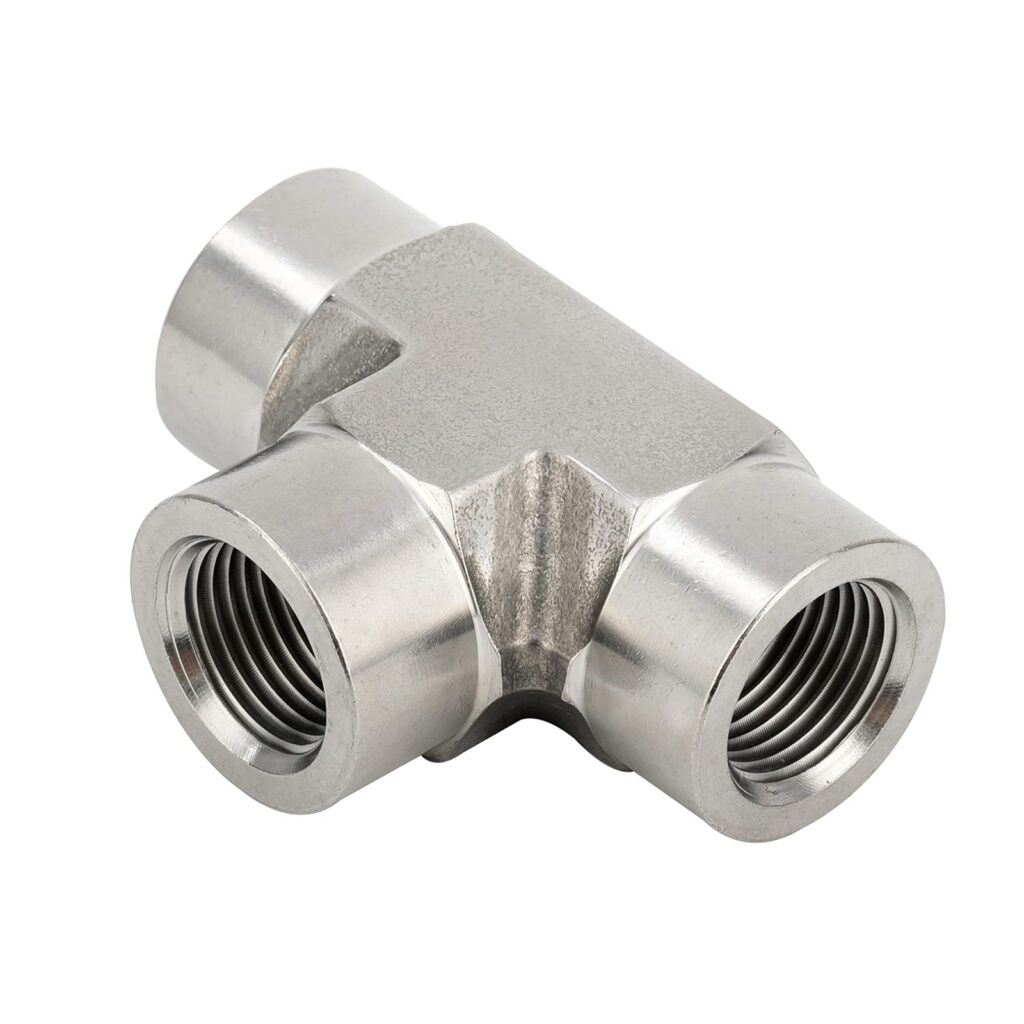
Tees are essential pipe fittings widely used in industrial, commercial, and residential piping systems for distributing and diverting flow. A Tee has one inlet and two outlets oriented at 90 degrees from the main line or one outlet and two inlets, allowing for a branching of the pipe system. Tees are designed to provide a smooth flow path and maintain pressure while connecting pipes of the same or different diameters. They are critical components in water supply networks, chemical processing plants, oil and gas pipelines, power generation units, and HVAC systems.
Tees are available in various configurations such as Equal Tees, which connect three pipes of the same diameter, and Reducing Tees, where the branch outlet has a smaller diameter than the main pipe. This makes them suitable for both uniform flow distribution and pressure reduction applications. Materials for tees vary based on application requirements and include Carbon Steel, Stainless Steel (304/304L/316/316L), Alloy Steel, Duplex Steel, Nickel Alloys, and Copper/Nickel Alloys. Each material offers specific mechanical and corrosion resistance properties to meet stringent industrial standards.
Manufacturing processes include Seamless, Welded, and Buttweld, providing durability, leak-proof joints, and high-pressure handling capabilities. Tees comply with international standards such as ASTM, ASME, DIN, EN, and ISO, ensuring consistent quality and compatibility with global piping systems. Critical specifications include Nominal Diameter (DN), Pressure Rating (PN/ANSI Class), Wall Thickness, End Connections (Buttweld, Socket Weld, Threaded), and Tolerance Limits.
Tees are engineered to withstand high pressure, temperature, and corrosive environments. Stainless steel tees offer exceptional resistance to corrosion and oxidation, suitable for chemical, marine, and food-grade applications. Carbon steel tees provide high strength and toughness for oil, gas, and power sectors. Special alloys and duplex steel tees are designed for high-temperature and aggressive chemical environments. Choosing the correct tee material, type, and dimension is critical to ensure system efficiency, safety, and longevity.
In summary, tees are indispensable in pipe networks, enabling branching, flow control, and pressure management. Their versatility in material, type, and specifications makes them a critical component in any piping system. Manufacturers such as Neonox Overseas provide a comprehensive range of tees engineered for optimal performance, adhering to global quality standards. Selecting the right tee ensures reliability, cost efficiency, and long-term operational safety in all industries.
| Type | Material | Standard | Nominal Diameter (DN) | Pressure Rating | Wall Thickness | End Connection | Manufacturing Process | Application |
|---|---|---|---|---|---|---|---|---|
| Equal Tee | Carbon Steel | ASTM A234 WPB / ASME B16.9 | 15–600 mm | Class 150–3000 | Schedule 10–160 | Buttweld / Socket Weld / Threaded | Seamless / Welded | Oil & Gas, Water, Steam |
| Reducing Tee | Stainless Steel 304/304L | ASTM A403 WP304/304L | 15–600 mm | Class 150–600 | Sch 10–160 | Buttweld / Socket Weld / Threaded | Seamless / Welded | Chemical, Food, Marine |
| Equal Tee | Stainless Steel 316/316L | ASTM A403 WP316/316L | 15–500 mm | Class 150–600 | Sch 10–160 | Buttweld / Socket Weld / Threaded | Seamless / Welded | Chemical, Pharmaceutical, Marine |
| Reducing Tee | Alloy Steel / Duplex Steel | ASTM A234 WP11 / WP22 / DIN 2615 | 15–400 mm | Class 150–2500 | Sch 10–160 | Buttweld | Seamless / Welded | High Temp / High Pressure, Petrochemical |
| Equal Tee | Copper / Copper Nickel | BS EN 12449 / ASTM B466 | 10–300 mm | Class 150–300 | Sch 10–80 | Buttweld / Socket Weld | Seamless | Marine, Fresh Water, HVAC |
Powered by NeonOx Overseas | Designed and Developed by Rujal Media Pvt Ltd